When the state shapes religion: Denmark's pragmatic faith
ביקור בכנסייה ביוטלנד חושף כיצד המדינה הדנית משלבת דת, מסורת וחילוניות באמצעות מוסדות שמעדיפים השתייכות מעשית על אמונה מוחלטת.
We spent Christmas and New Year’s in hardcore Denmark. We were hosted by a Danish family at the very edge of the suburbs in Jutland.
We arrived in the afternoon, just in time for the festive Christmas mass at the local church. People were walking towards us, shouting that there was no room. Well, we’re Israelis. A little crowding doesn’t scare us.
It was strange to see the secular-atheist Denmark I know suddenly appear so religious. On a regular Sunday, the churches here are empty, and the question of why they are needed at all comes up quite often.
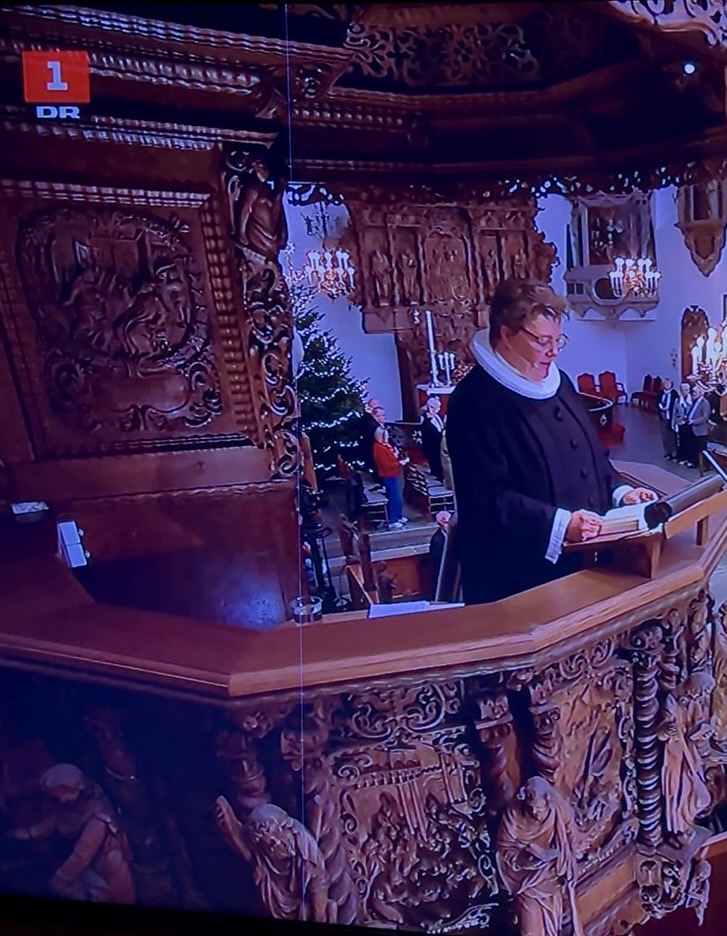
On New Year’s Eve, we peeked at the fireworks from the window and immediately turned on the television. I’m no longer at an age to frolic in this cold, and besides, the fireworks remind me of, you know what, so I preferred the screen.
The ceremony began with a speech from the new king. From there, it moved, once again, to a festive mass at a church in Copenhagen.
The camera focused on a woman. At least, that’s how I think she identifies. She was wearing the traditional clerical robes and reading the sermon.
I’ve been living here for six years and still haven’t gotten used to it. Not because it’s strange. But because it’s so normal.
Women in the Majority of the Clergy
In Denmark, women are the majority in the clergy. The majority.
How did this happen? Not because God revealed Himself in a dream to a bearded bishop.
In 1948, the Danish parliament, a completely secular body, determined that it was unreasonable for a democratic country to have a profession closed to women. The state simply forced religion to align with its egalitarian morals. One bishop agreed to ordain three women into the clergy. And from there, history.
Religion as a Public Service
What amazes me about Denmark time and again is the pragmatic ability of the state and the public to use religion, rather than religion using them.
Newsletter
Stay in the loop
New field notes in English, delivered to your inbox. No spam, unsubscribe any time.